Intro to English Classes
Principles of doing well in English class.
Open presentation ↗Choose a presentation and work through the slides at your own pace. Afterwards, take the short quiz and check your answers. Your answers are not saved or sent anywhere. If you refresh or leave the page, they disappear.
A practical guide to recurring mistakes caused by translating Spanish directly into English, with examples of the correct patterns.
Each presentation is a short lesson. The dedicated page will show the slides one at a time, followed by an explanation and a small private quiz. Your answers stay in your browser and disappear when you leave.
Principles of doing well in English class.
Open presentation ↗
Recognize the parts of a sentence and how they fit together.
Open presentation ↗
A compact reference to English tense uses, auxiliaries, and common time markers.
Open presentation ↗
Build clear questions by placing each part in the correct order.
Open presentation ↗Recognize common errors caused by Spanish-to-English translation and practise the fixes.
Open presentation ↗
When to use the, when to omit it, and how context changes the rule.
Open presentation ↗
How auxiliary verbs form questions, negatives, agreement, emphasis, and more.
Open presentation ↗
Learn prepositions as parts of phrases instead of translating them word by word.
Open presentation ↗
Use look, feel, sound, and seem in six practical sentence patterns.
Open presentation ↗
Learn when English uses say or tell and how their object patterns differ.
Open presentation ↗
Learn which verbs take a gerund, an infinitive, or either form—and when meaning changes.
Open presentation ↗
Express excess, problems, sufficiency, and necessary thresholds.
Open presentation ↗
Transform statements, questions, commands, requests, and advice into reported speech.
Open presentation ↗
Equal qualities, differences, and the language of highest and lowest degree.
Open presentation ↗
Real, unreal, and past unreal conditions and the results they describe.
Open presentation ↗
Present wishes, unreal possibilities, desired change, past regrets, and “if only.”
Open presentation ↗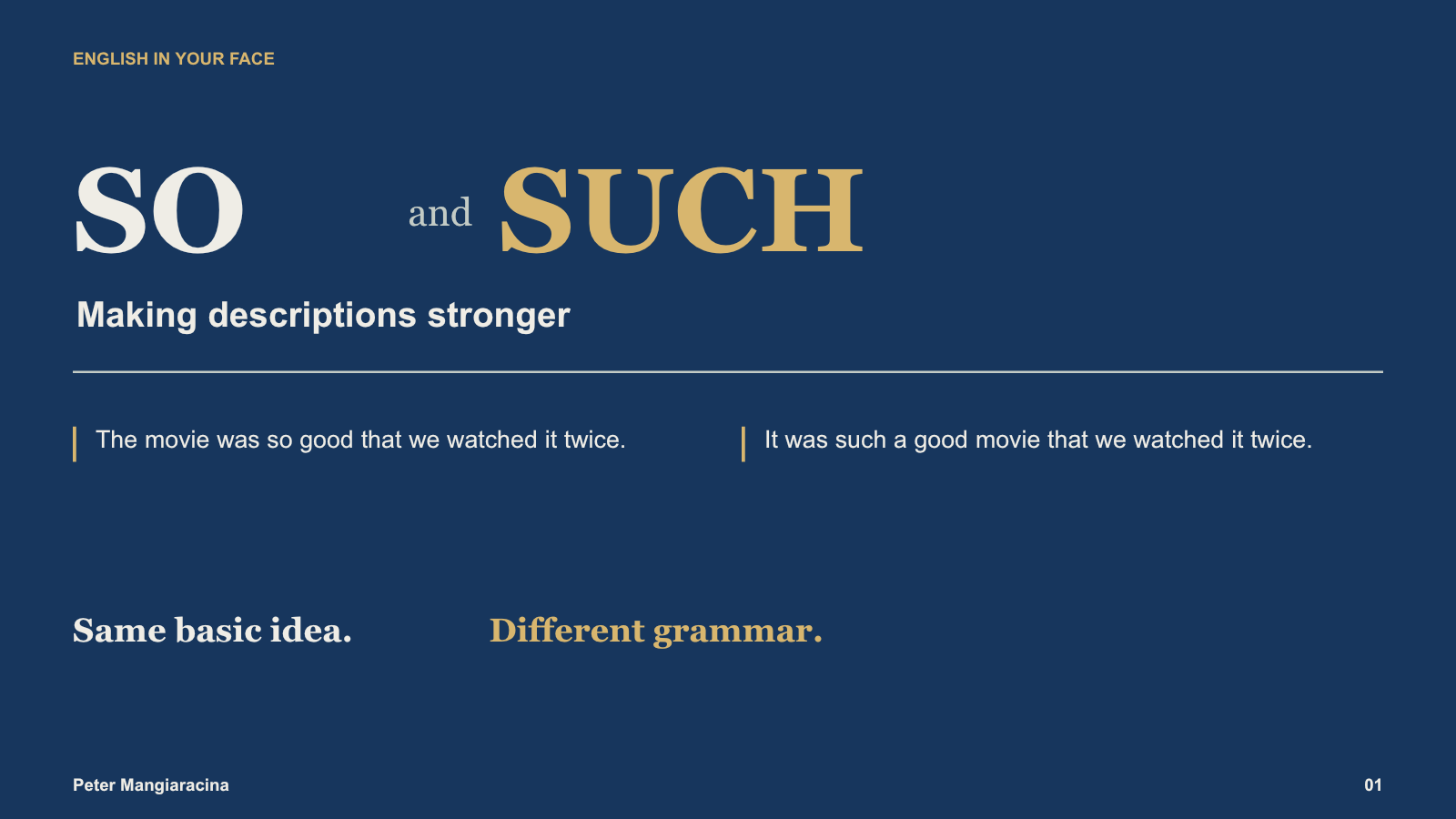
Use so and such correctly before adjectives, adverbs, nouns, and noun phrases.
Open presentation ↗
Distinguish three similar verbs and learn the sentence patterns used with each one.
Open presentation ↗
Distinguish be used to, get used to, and used to + verb.
Open presentation ↗
Use past participles and participle phrases to describe nouns.
Open presentation ↗
Learn how to say what you want to achieve and why things happen.
Open presentation ↗
Compare three structures for causing or permitting another person to act.
Open presentation ↗
See how passive sentences shift attention from the doer to the receiver of an action.
Open presentation ↗
Compare direct and indirect passive patterns with verbs that take two objects.
Open presentation ↗
Learn why embedded questions use clause order instead of question order.
Open presentation ↗
Distinguish subject and object forms and place prepositions naturally.
Open presentation ↗
Meet the true modals, their shared characteristics, meanings, and alternatives.
Open presentation ↗
Study modal meanings, time reference, alternatives, negation, and auxiliary structure.
Open presentation ↗
Review English modals through a complete Spanish-language explanation.
Open presentation ↗
Organize an introduction, body, and conclusion, then deliver the presentation clearly and confidently.
Open presentation ↗
Create, format, and perform a dialogue built around conflict, negotiation, and resolution.
Open presentation ↗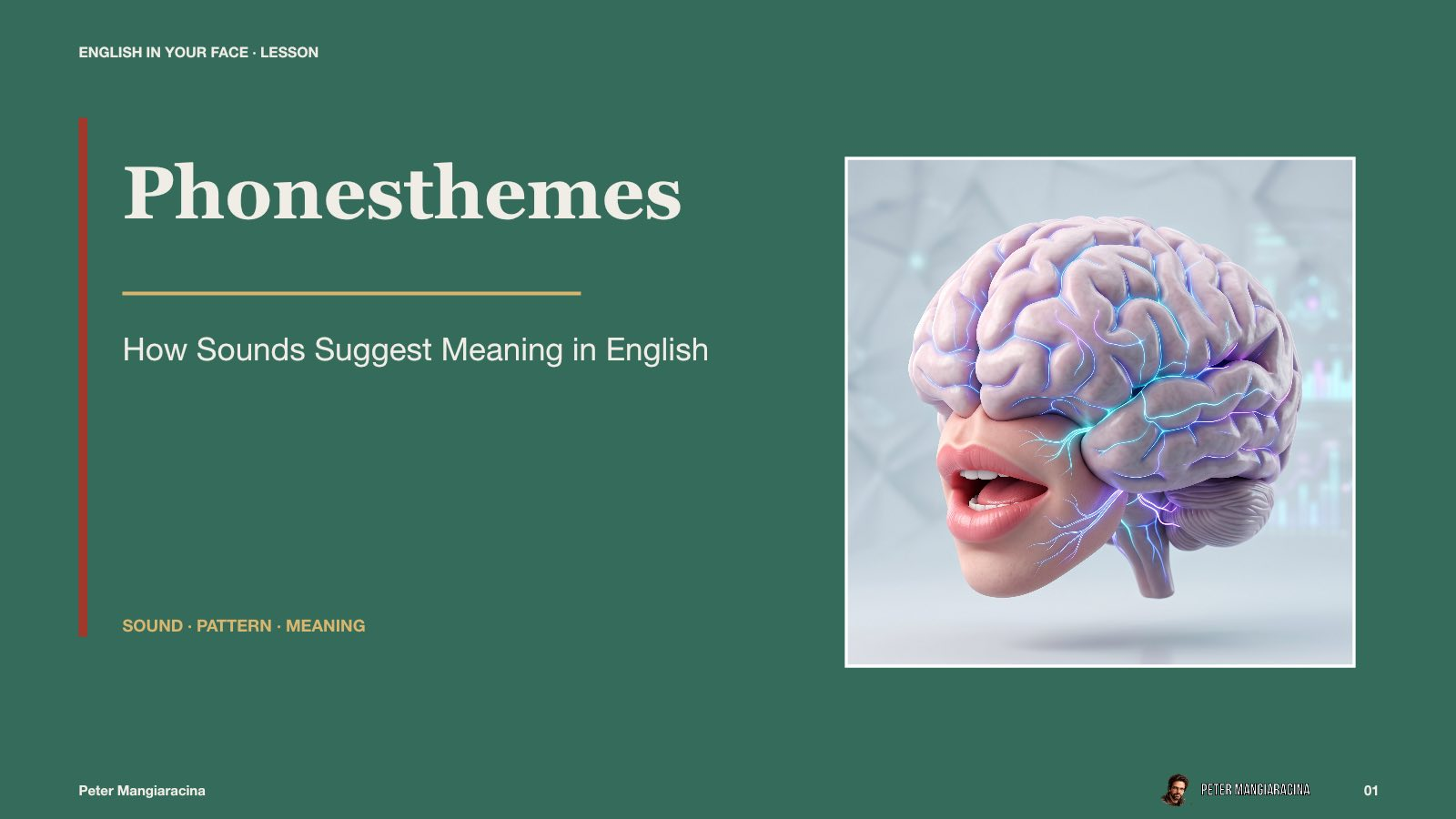
Explore recurring sound patterns that suggest related meanings in English words.
Open presentation ↗